
TIMELINE
2024-2025
SKILL
Cultural Research 、Heritage Interpretation、 Bilingual Writing、 Community Outreach 、Digital Storytelling、 Cross-Cultural Communication
ROLEFounder&Youth Heritage Ambassador
Illuminating Heritage
—————————————————————————————————————————————————————————————————————————————————————————————————
INSPRIATION
How can ancient cultural heritage remain meaningful to younger generations in a rapidly modernizing world?
Heritage does not need to stay frozen to survive in a fast-modernizing world. It stays relevant to young people by being translated into approachable visual and digital languages, reconnected to daily life and the universal need for belonging, and reimagined by young creators through new mediums — shifting from a distant relic to a relatable cultural anchor. This is the core of Illuminating Heritage.
My visits to Shanxi's ancient temples led me to ask:Why do some cultural traditions survive for centuries while others disappear?
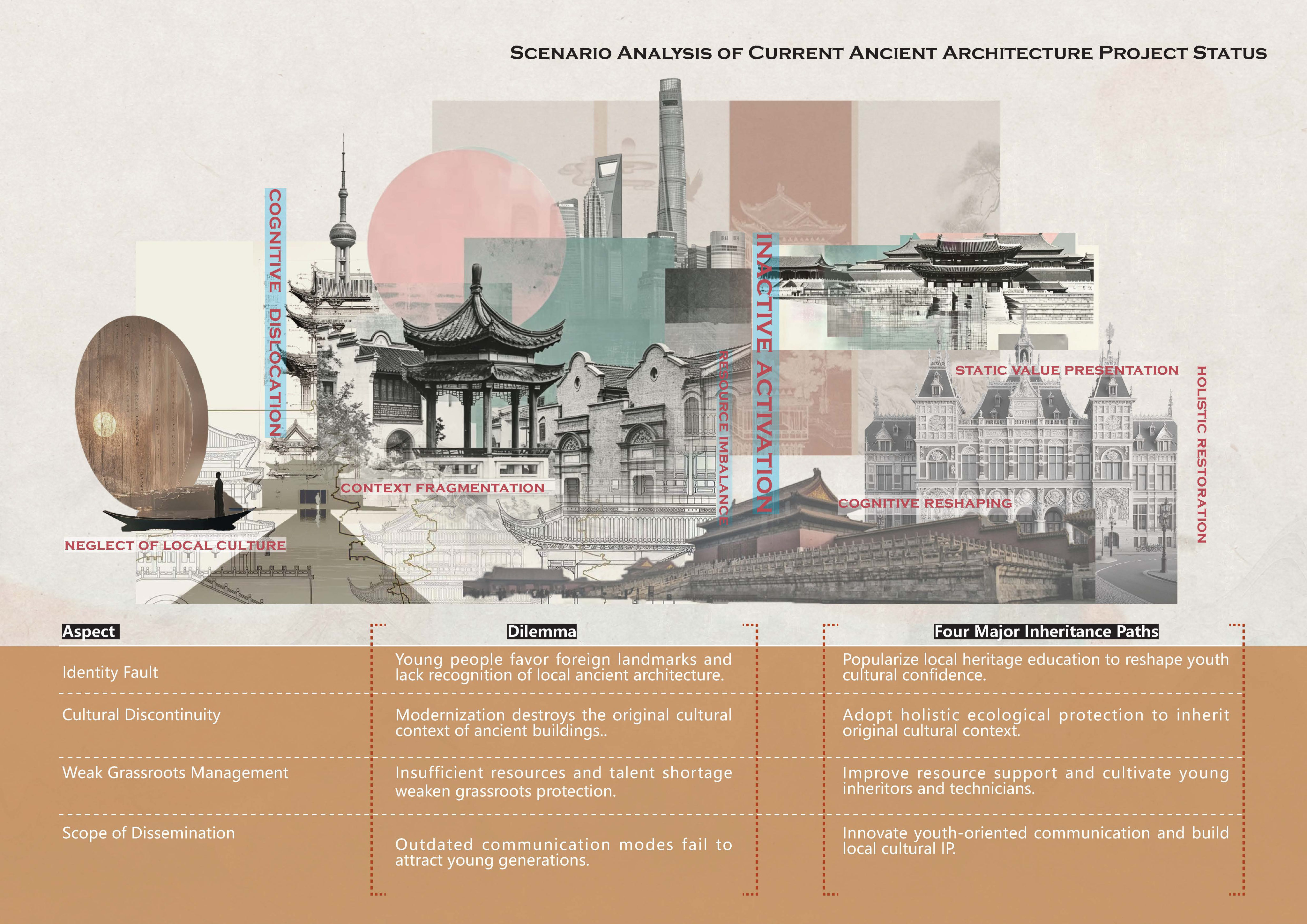
Visiting ancient temples in rural Shanxi, I noticed a stark contrast: young people know landmarks like Notre-Dame de Paris and Kiyomizu-dera well, yet know little about millennia-old temples in their own hometowns.Why do some cultural traditions survive for centuries while others disappear? The root causes are absent contemporary translation and broken living connections.This gave rise to my project Illuminating Heritage, which retells temple stories through creative practice to bring local heritage back to modern life.
Research
Research Methodology
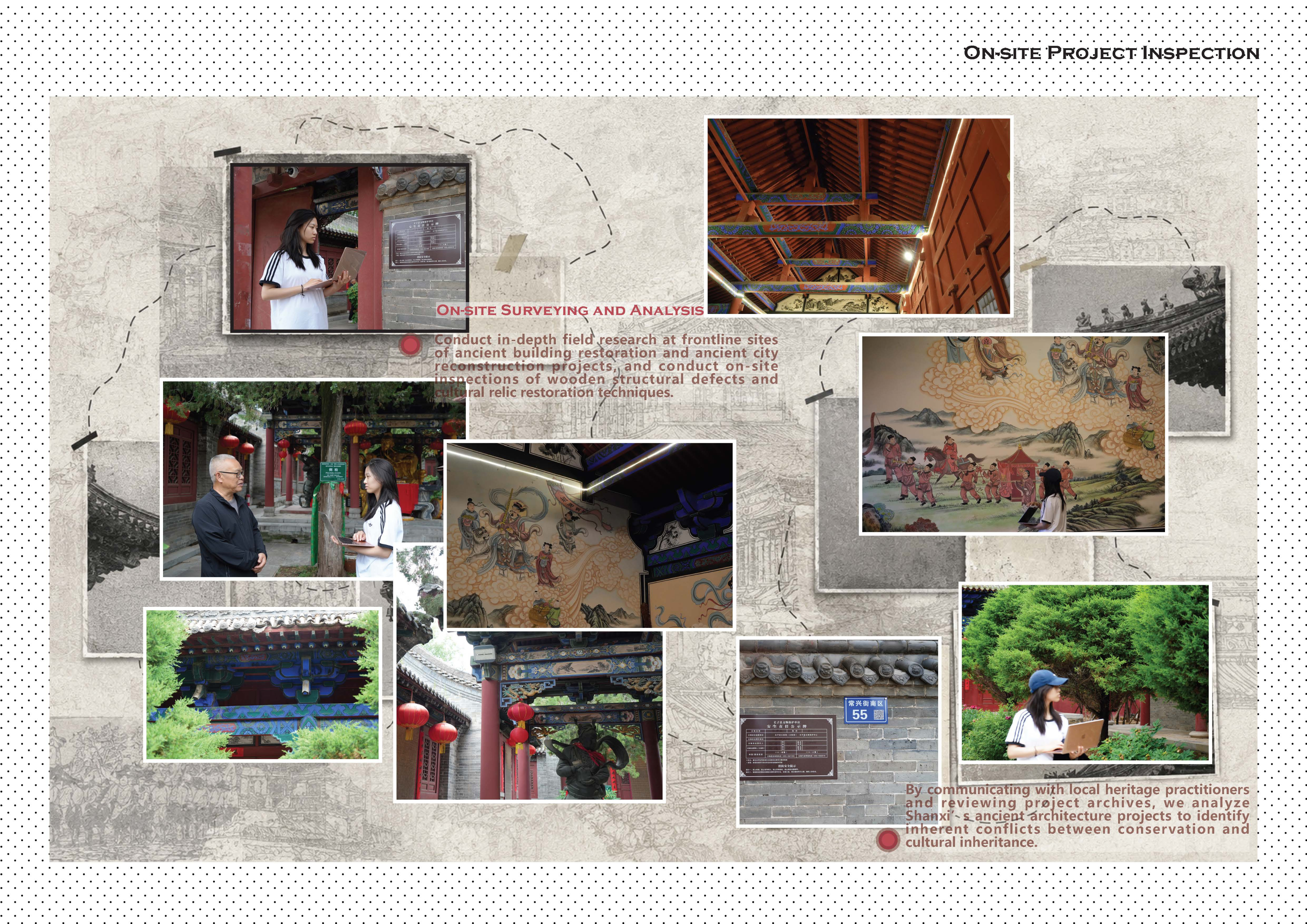
The research adopts mixed qualitative fieldwork methods: I conducted high-resolution photography and on-site sketching to document timber structures, Dougong (interlocking wooden bracket sets), and fine details of murals and painted sculptures. I also transcribed inscriptions on stone steles and beam frames, cross-verifying information against local historical archives held in museums. In addition, I interviewed grassroots heritage conservators and elderly local residents to collect oral memories and folk traditions not recorded in official histories, while documenting natural light shifts and spatial circulation inside temples to accumulate intuitive sensory references for subsequent creative practice.
Outcomes & Project Implications
The fieldwork has built an exclusive first-hand material library consisting of visual references, sketches, oral transcripts and structural research notes. It also validates the core proposition of the project: despite outstanding artistic and historical value, most rural ancient temples with official heritage status have long remained in the shadows of public awareness, lacking accessible interpretive pathways for contemporary young audiences. This finding further anchors the creative direction of Illuminating Heritage, providing solid local cultural grounding for subsequent visual translation and creative practice, and avoiding the empty appropriation of stereotyped cultural symbols.
Temple Database——Distribution Map of Ancient Temples
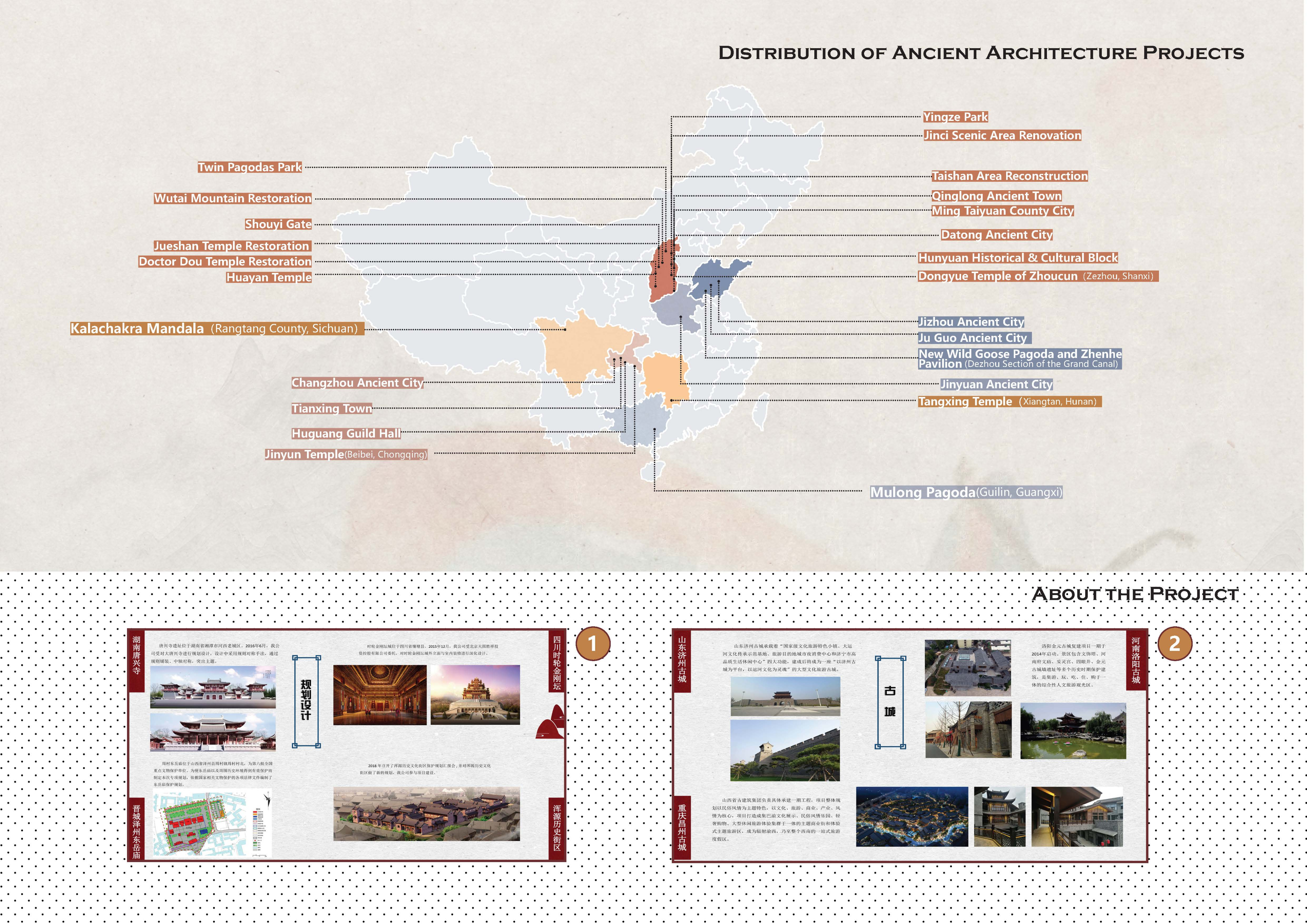
This map is compiled from first-hand field research data. It marks all ancient temple sites surveyed across Shanxi, categorized by construction dynasty (Yuan / Ming / Qing), architectural form, and heritage protection level (national / provincial / county-level), with supplementary markers for adjacent ancient building complexes and museums. It reveals the spatial pattern of temples clustered along ancient trade routes, the Qinhe River basin and historic village settlements, and summarizes the symbiotic layout logic of landscape – trade road – village – temple, providing spatial evidence for subsequent creative narrative and cultural translation.
>>Click here to access complete mapping information
ACTION
Bilingual Heritage Interpretation
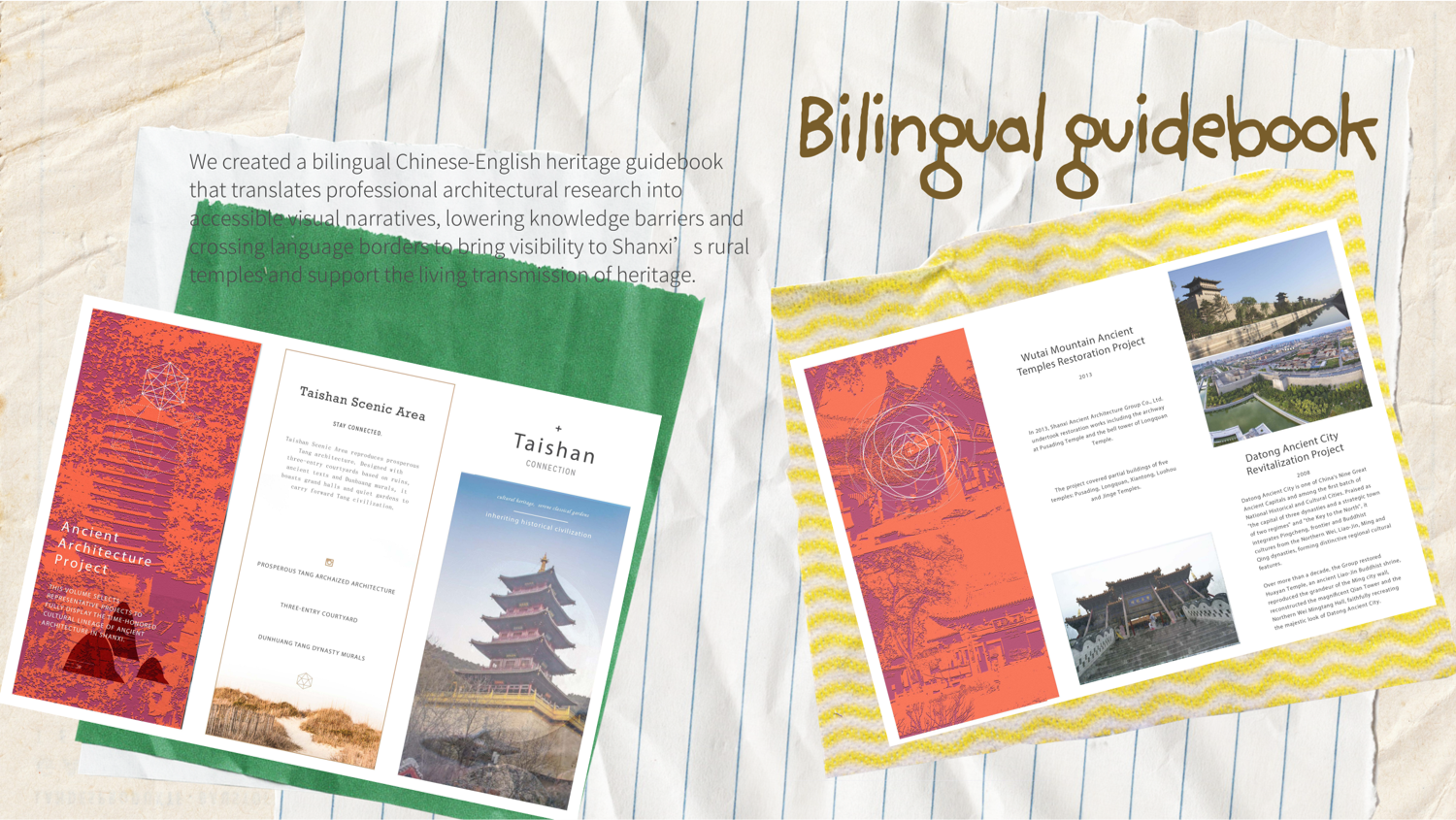
As a public-facing output of Illuminating Heritage, we developed a Chinese-English bilingual guidebook for ancient architectural heritage. Moving beyond dry, jargon-heavy heritage bulletins, the guide transforms field research findings — including architectural features, dynastic renovation histories, stories behind murals and painted sculptures, and local folk legends — into light, visual and accessible content. It lowers knowledge barriers for local young people to build emotional bonds with heritage in their hometowns, while breaking cross-language barriers to bring the overlooked cultural value of Shanxi’s rural temples to wider audiences. With approachable, shareable interpretive design, the guide offers a tangible pathway to support the living transmission of cultural heritage.
Community Outreach & Heritage Education
Taking on the role of lead organiser, I built the full event framework from scratch, liaised with local heritage teams and village communities to secure venues and coordinate resources, and ran the complete line-up of community heritage education programmes: public architecture talks, heritage-themed scavenger hunts and on-site temple tours. I designed all activities as low-threshold participatory experiences that help local residents and young people build emotional bonds with heritage, strengthen local cultural identity, and take voluntary action to conserve nearby sites — translating the project’s core creative concept into measurable, tangible public impact.
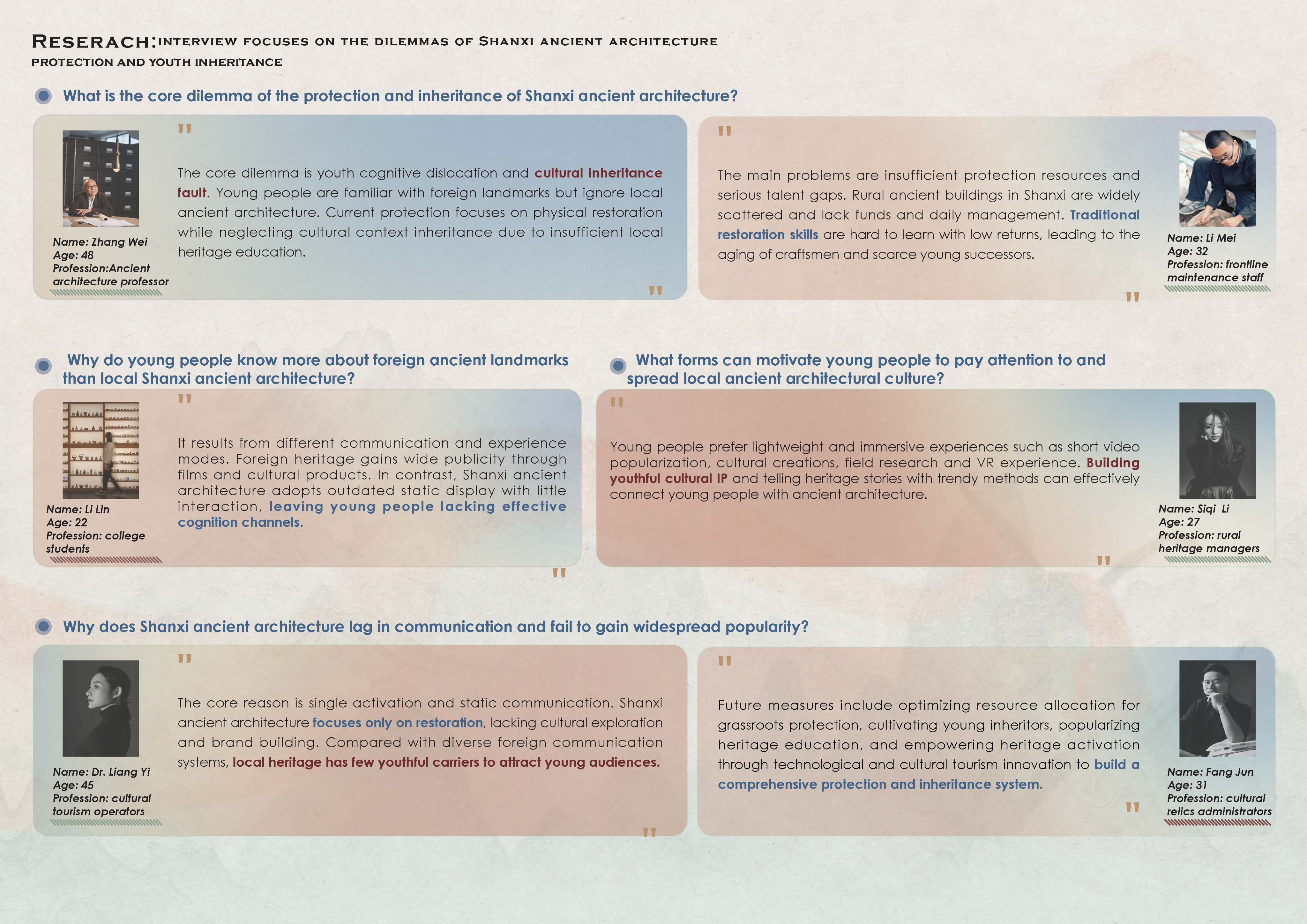
On-site In-depth Interviews: Recovering Living Temple Memories Beyond Written Archives
During fieldwork, I conducted semi-structured on-site interviews with heritage staff, local villagers, heritage craftspeople and folk tradition bearers, collecting oral memories, folk tales and ritual customs unrecorded in official archives. These living local narratives provide first-hand references for subsequent creative practice and public programmes.
Digital Preservation & Global Storytelling
This project creates high-fidelity digital records of Shanxi’s rural temple heritage, and shares its stories through accessible cross-cultural visual narratives to support long-term preservation and global reach of overlooked local heritage.
IMPACT & METRICS
Illuminating Heritage creates multi-dimensional impact: for research, it completes fieldwork on 3 ancient temples and historic villages plus expert interviews, building an Ancient Temple Database and Bilingual Cultural Resource Archive to supplement first-hand materials for rural heritage studies; for education, it delivers public talks, Heritage Day events and campus sharing sessions to popularize heritage knowledge and foster cultural identity across groups; for digital outreach, it breaks spatial and linguistic barriers through online communication to realize digital preservation and cross-cultural reach. The project outcomes also provide practical reference for grassroots heritage management and local heritage activation policies, forming a closed impact loop from research to implementation.