TIMELINE
2026-present
ROLELead Research-Based Artist、Cross-Cultural Public Dialogue Initiator
SKILL
Cultural Research & Analysis、Visual Creation & Cultural Translation、Interdisciplinary Collaboration & Communication、Curation & Digital Experience
Visualizing Social Order and Cultural Identity in Japanese Public Spaces
—————————————————————————————————————————————————————————————————————————————————————————————————
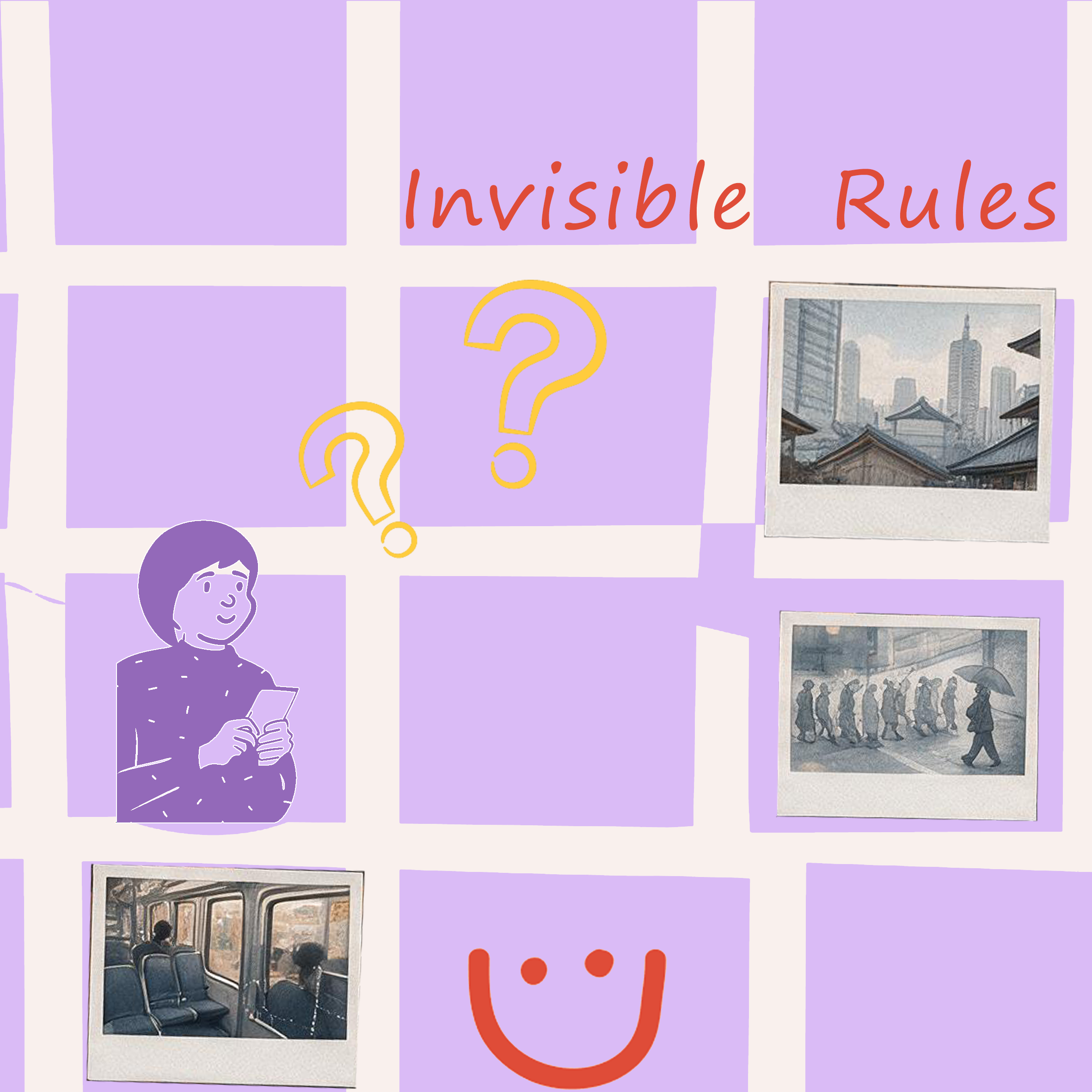
Invisible Rules:
INSPRIATION
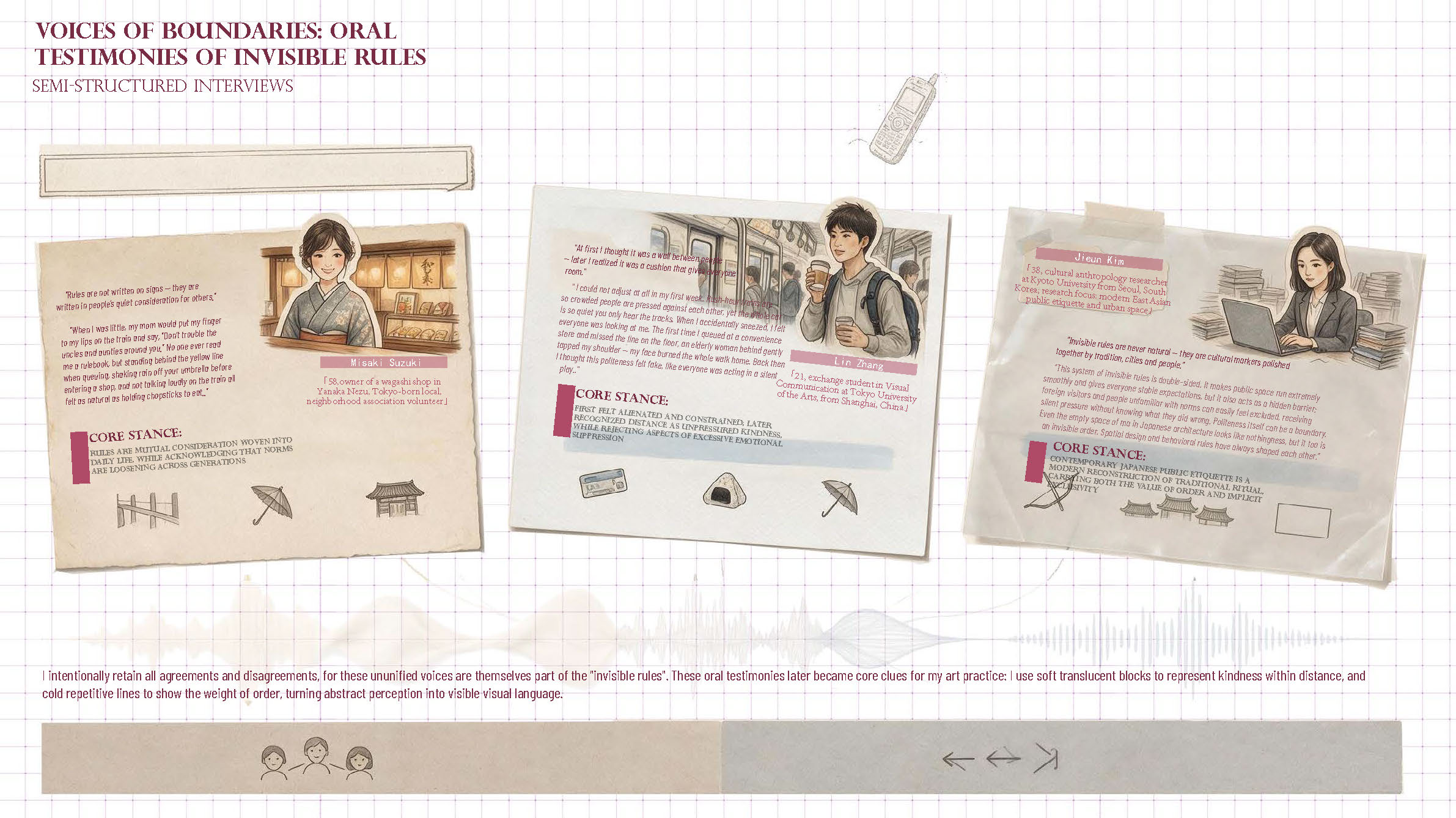
During fieldwork in Japan, I began to notice easy-to-overlook details in urban public space: the physical gaps between train passengers, spontaneous behavioral coordination between pedestrians on rainy streets, personal boundaries maintained in convenience stores, and the coexistence of traditional architecture and the modern city. These observations raised a core question: why do people collectively follow shared behavioral patterns even when social rules are never formally written down? Through art, I aim to render these invisible social norms visible and open to observation and discussion.
ACTION
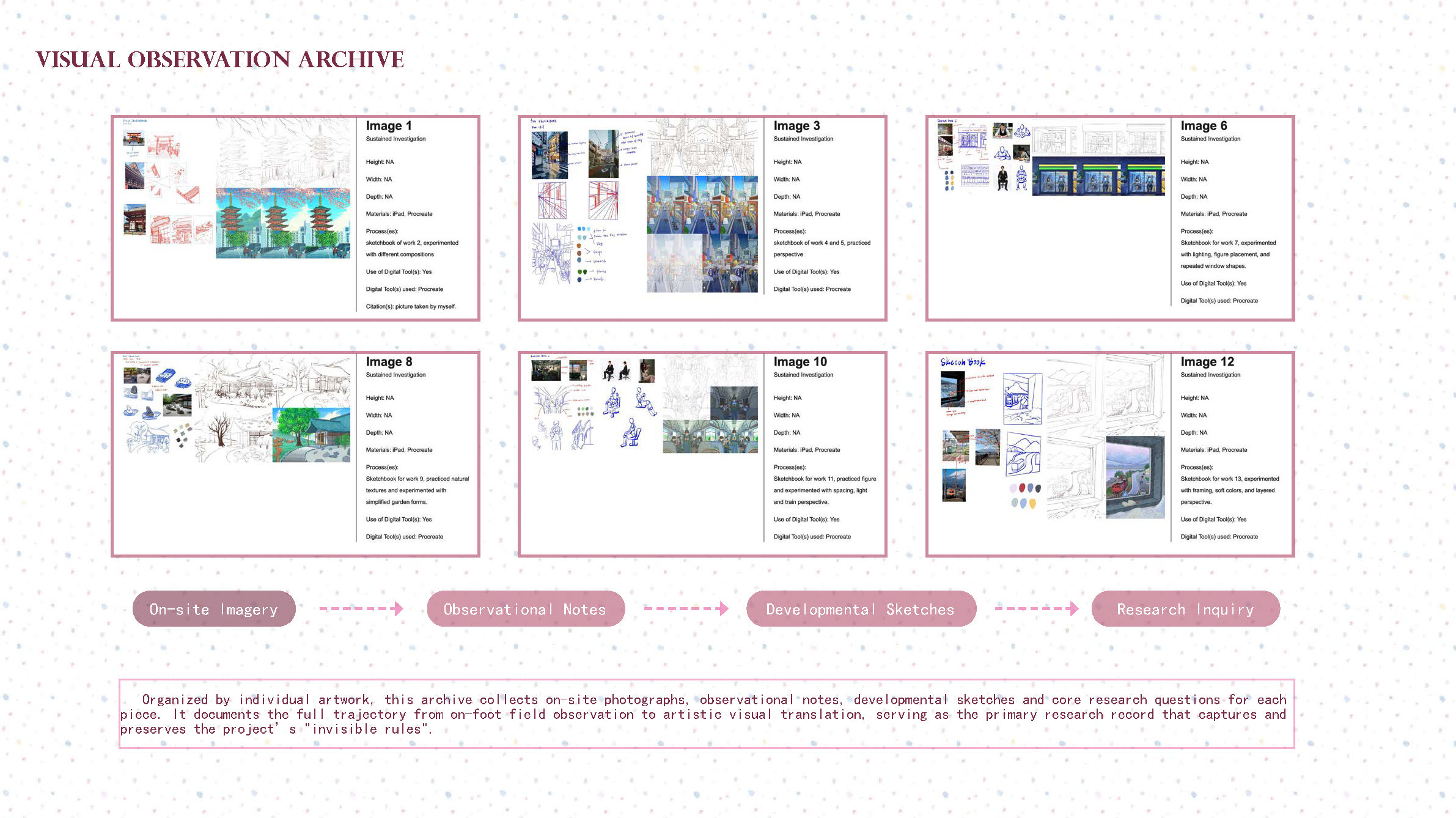
To explore this question, I developed a Sustained Investigation for my AP Drawing portfolio, taking Japanese streetscapes, commuter trains, convenience stores, traditional architecture, and everyday life as core subject matter. Through field observation, photographic reference, developmental sketches, digital painting, and multiple rounds of revision, I work with figure posture, repetitive visual motifs, spatial perspective, warm and cool color palettes, and artificial lighting to explore personal boundaries, public order, social distance, and the relationship between tradition and modernity. Through the creative process, my focus gradually shifted from depicting the surface appearance of Japanese cities to unpacking the cultural meanings embedded in space and human behavior.
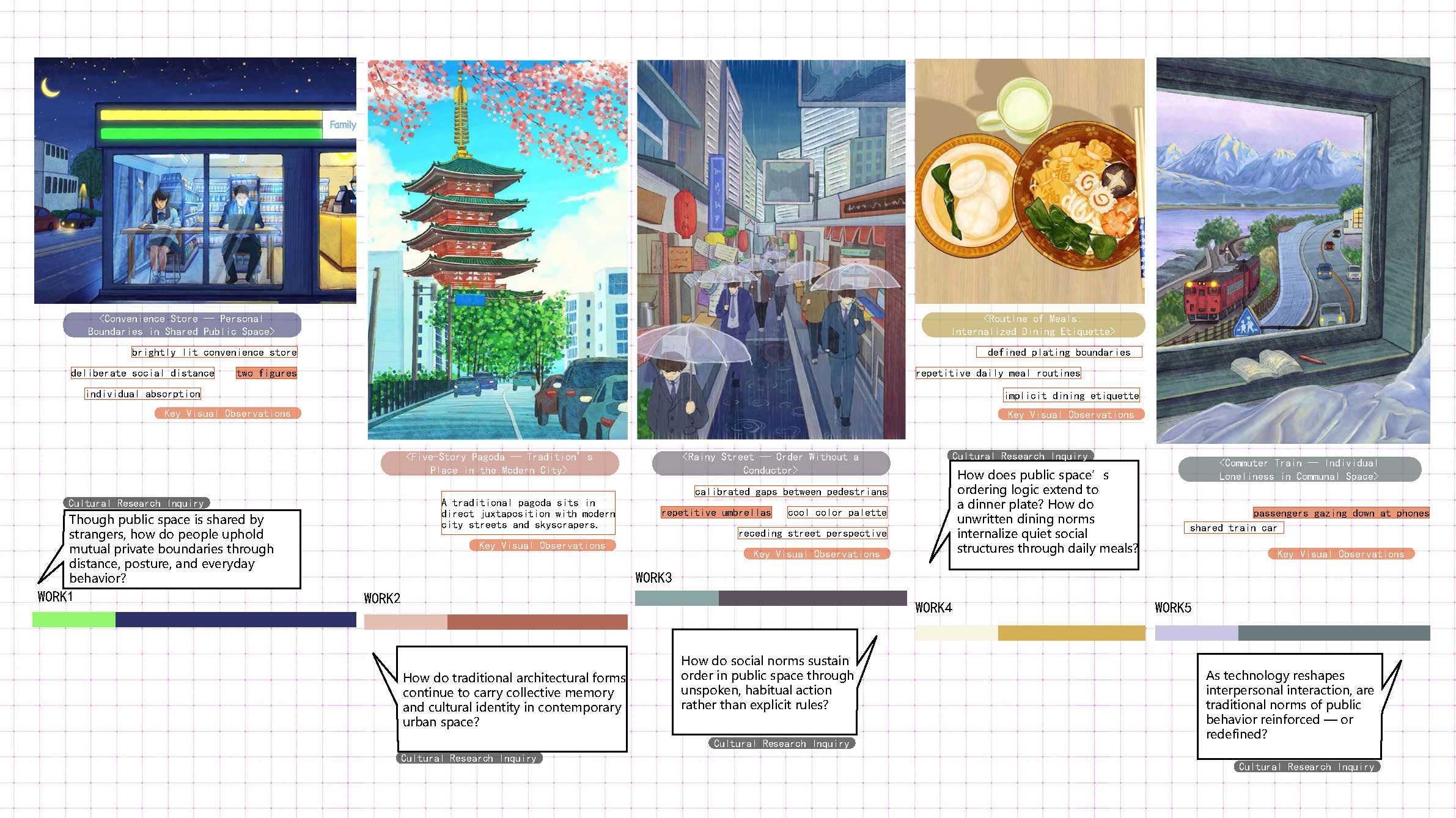
>>Click here to read the full portfolio
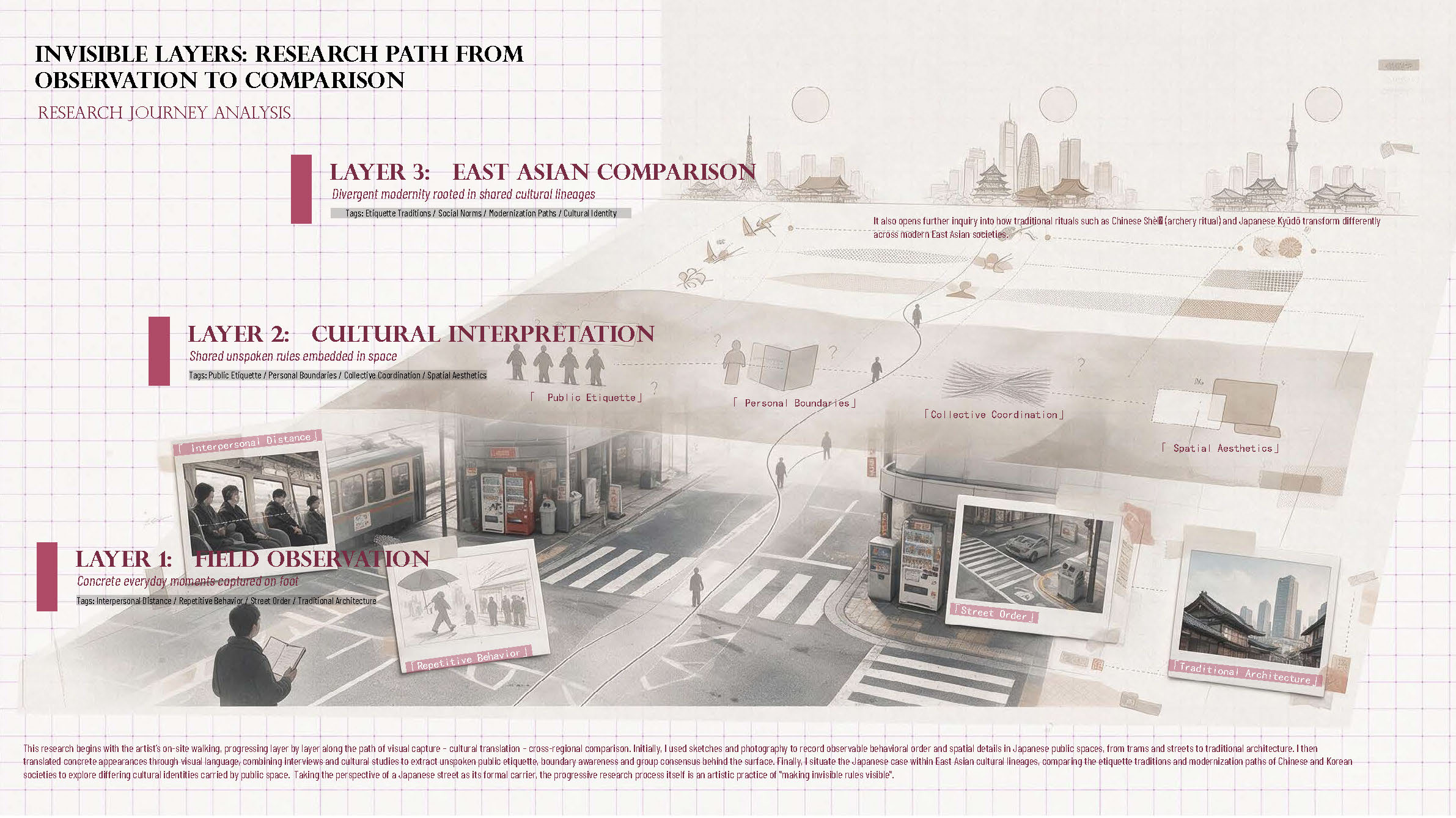
Seeing Landscape → Observing Behavior → Questioning Culture
My observation unfolded in three progressive stages: first, I saw Japanese cities and architecture; then I noticed the unspoken behavioral understandings people share when using public space; finally, I was no longer content to record landscapes, but wanted to ask how culture shapes social behavior.This shift from seeing to questioning did not arise from a taste for exotic culture, but from a natural deepening from visual expression to cultural research, driven by intellectual curiosity.
IMPACT
AP Drawing portfolio
I completed a cohesive AP Drawing portfolio centered on Japanese public space, presenting the connection between social order and everyday behavior through a series of interconnected artworks. This project not only strengthened my visual communication skills, but also reshaped how I perceive the social world: art is no longer merely a way to record the scenes in front of me, but a methodology for asking cultural questions and analyzing social phenomena. Looking forward, I hope to expand this work through digital exhibitions, cross-cultural interviews and audience feedback, inviting broader audiences to join conversations about public space and cultural norms.
FUSION
AP Drawing portfolio
This research has become a core starting point for my wider exploration of East Asian culture. The social norms embedded in Japanese public space led me to further examine ritual etiquette and self-cultivation in traditional Chinese Shèlǐ (archery ritual) and Japanese Kyūdō (formal archery), as well as how traditional architecture preserves social values and collective cultural memory. I aim to integrate visual art, cultural anthropology, historical research and digital technology to compare how East Asian societies transmit cultural meaning through everyday behavior, ritual, architecture and public space, and to explore how these traditions persist and transform amid modernization.